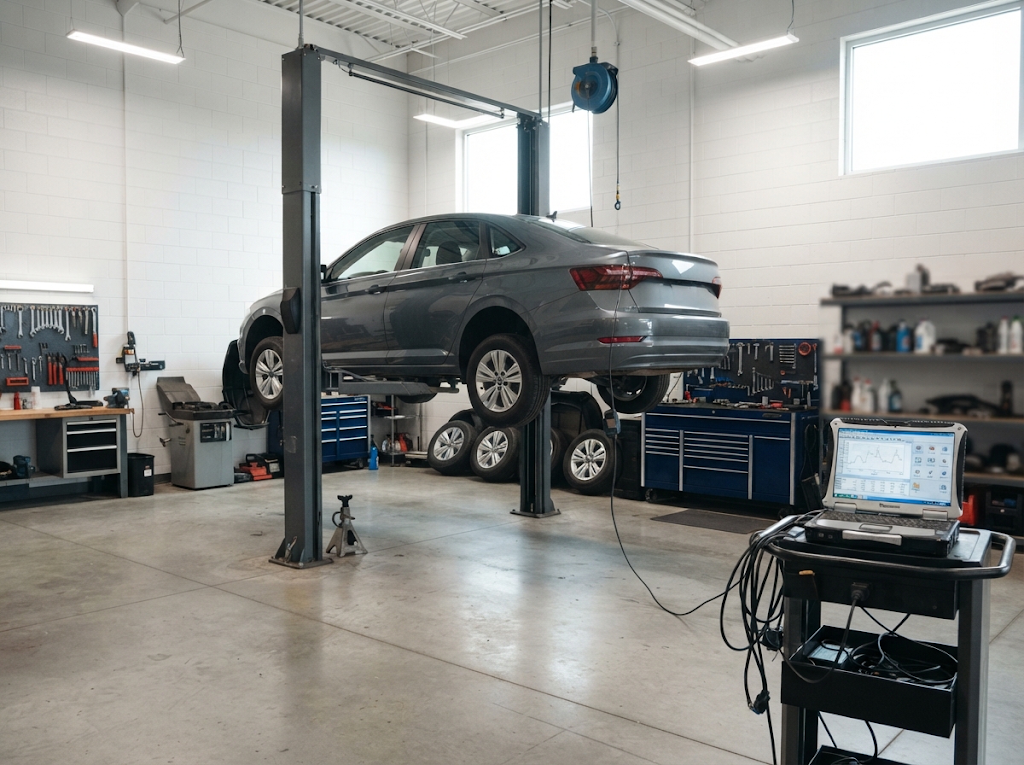
When a mechanic opens a repair manual, there is no room for guessing. A torque value, a warning about a high-voltage battery or a step in a brake procedure must be exactly right, because the person who follows it may be working under a two-tonne car. Germany builds some of the world's most complex vehicles, and its manufacturers publish workshop manuals, service bulletins and diagnostic guides that independent garages across the world rely on. An automotive service document is a safety instrument, so its translation must preserve every number, every warning and every sequence of steps. This guide explains how importers, workshops and parts suppliers can handle German automotive documentation in English.
Types of Automotive Documents
The main families are workshop manuals, wiring diagrams, service bulletins, recall notices, parts catalogues, diagnostic trouble code descriptions, owner manuals, training materials and warranty guidelines. Each has its own style. A parts catalogue is mostly names and numbers, while a repair procedure has many steps, tools and cautions. A recall notice is also a legal document with deadlines.
Standards and Regulations
Vehicle safety and type approval are governed by international rules, many of which are maintained by the United Nations Economic Commission for Europe, as described at unece.org. Manuals that refer to these rules must use the official terminology, so a translator needs to know which regulation applies and how its terms are expressed in English.
Terminology and Component Names
German technical compounds can be long, and the English equivalent may differ between British and American usage. A component may have one name in a German manual, another in a parts catalogue and a third in the diagnostic software. The translator should work from the manufacturer's own English terminology where possible, and build a glossary that links the German term, the English term and the part number. An experienced german translation agency can set up this workflow and assign engineers who are familiar with vehicle systems.
Numbers, Units and Tolerances
Repair procedures contain torque values, clearances, pressures, voltages and fluid capacities. These numbers must be copied exactly, and units must be converted only when the receiving market requires it. When conversion is needed, show both values and state which one is binding. A decimal comma in German becomes a decimal point in English, and a wrong placement can change a value by a factor of ten.
Warnings and Cautions
Manuals use signal words such as danger, warning and caution, each with a specific meaning. High-voltage systems in electric and hybrid vehicles, airbags, fuel systems and lifting points require clear safety instructions. Do not shorten or soften them. Keep the same layout and symbols, and make sure that every warning appears in the same place as in the original.
Wiring Diagrams and Graphics
Diagrams contain labels, legends and abbreviations. These must be translated without changing the position of lines or symbols. Some text is embedded in images, so the translator needs the source files. Check that abbreviations are explained in a legend, since German and English abbreviations for sensors, relays and connectors often differ.
Software, Diagnostics and Codes
Diagnostic tools display fault descriptions, instructions and menus. These strings must be translated in a way that fits the screen and stays consistent with the manual. Fault codes themselves should not be translated, but their descriptions should be clear and precise. Test the translated software with a technician before release.
Service Bulletins and Recalls
Bulletins inform workshops about known problems and corrections. Recall notices tell owners to bring in vehicles. Both are time-sensitive and may be checked by authorities. Deliver them quickly, and ensure that the English version contains the same actions, dates and conditions as the German original. For another view on this language pair, see this article on German to English translation.
Training Materials for Technicians
Technicians learn from manuals, videos and courses. Provide English subtitles, glossaries and quizzes to help them learn new systems, particularly for electric drivetrains and driver assistance. Include photographs of tools and components, and test the materials with a few technicians before releasing them widely.
Version Control and Quality
Manuals change with each model year. Keep a record of the version of the German source that each English document is based on, and update translations when the source changes. Use translation memory to reuse approved text and reduce cost. A final review by an automotive engineer, comparing the English with the German procedure step by step, is the best protection against errors that could harm a mechanic or a customer.
Electric and Hybrid Vehicles
Electric drivetrains introduce new vocabulary and new risks. Terms for battery packs, inverters, charging systems and isolation monitoring must be defined clearly, and procedures for disconnecting high-voltage systems must be translated with great care. Workshops need training before they work on these systems, so make sure that the English version of any qualification or safety requirement is exact and complete.
Parts Ordering and Compatibility
Part numbers, supersession notes and compatibility tables help workshops order the right component. Keep numbers unchanged, translate descriptions consistently and explain notes such as only for vehicles with a certain option. A clear catalogue saves returns, waiting time and frustration for customers who wait for their cars.